
Acton City Directory Collections
The documented Acton city directory run is uneven, which is useful information rather than a flaw to hide. The Massachusetts State Library inventory identifies Acton town directories for 1883–1884, 1902, 1913, 1926, 1936, 1941, 1947, and 1950. Each Acton edition is a dated lead, not a continuous annual record. The inventory did not identify a publisher or expose a scanned entry, so those details belong to an in-person inspection of the Acton volume’s title page and front matter. Acton Memorial Library’s local-history holdings provide the closest local context for turning an edition into careful family research.
| Collection | Years | Where Held | Access |
|---|---|---|---|
| Acton town directories | 1883–1884, 1902, 1913, 1926, 1936, 1941, 1947, 1950 | Massachusetts State Library inventory; confirm local shelf access with Acton Memorial Library | Inspect the edition, title page, and abbreviation key |
| Acton voting lists | 1978, 1980, 1988, 1992 | Massachusetts State Library; municipal years may be held by the Town Clerk | Election-record rules apply |
| Early Town Records | 1735–1829 | Acton Memorial Library project; originals with the Town Clerk | Digital transcription, library microfilm, and original verification |
| Annual town reports | Local runs through 2019; State Library through 2022, with gaps | Acton Memorial Library and Massachusetts State Library | Collection and library access |
Gaps between Acton editions matter. A person missing from one year may have moved, changed how a name was printed, or simply fallen into an unrepresented period. Keep the Acton edition year beside every transcription. Do not fill an absent year with a claim that the Acton household was unchanged.
Acton Directory Years
Those eight documented Acton directory points stretch from the 1883–1884 volume to 1950. They make a useful date ladder for an Acton surname or address, especially when paired with a federal census that is publicly released under the 72-year rule. The runs do not establish a yearly chronology. Instead, compare the nearest available Acton directory with a dated census, Acton town report, newspaper item, or recorded deed, then describe the result at the date each source actually represents.
The Acton Memorial Library local-history collection gathers annual reports, assessors’ lists, early church records, newspapers, yearbooks, military materials, images, and town-meeting sources that can help test a directory lead. Its holdings place names back into a local setting without converting a historical listing into a current-person record.
Acton Memorial Library’s local-history resources are the source for the collection shown here.
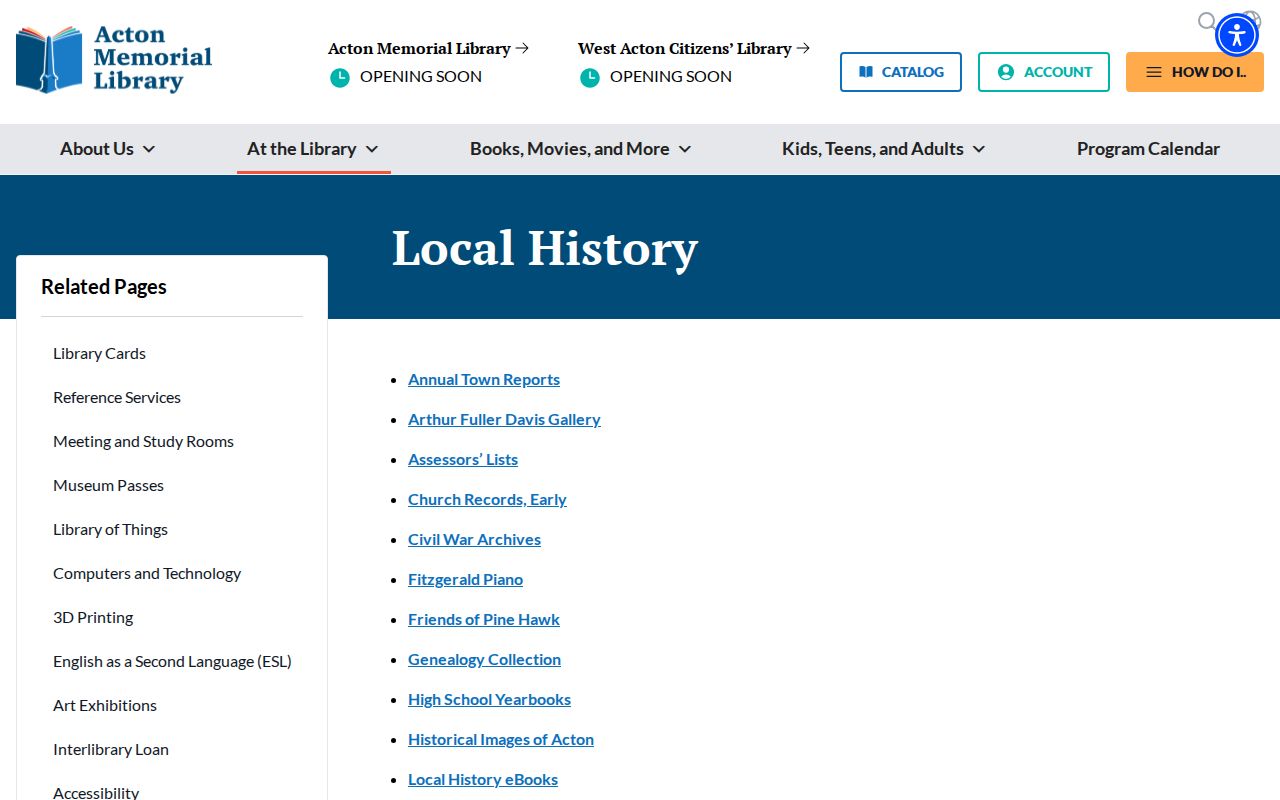
The Acton library image reinforces the practical starting point: locate the dated source first, then capture its edition, page, and access conditions with the name or address.
Acton Historical Shelves
Library access is part of the evidence trail. The Acton Memorial Library genealogy collection is non-circulating and held in a secure area, and visitors are asked to sign in at the Reference Desk. On-site resources include American Ancestors and Ancestry Library Edition. The library also states that Acton residents can use Fold3 and MyHeritage remotely under its stated arrangement. Record the collection name, search terms, page or image, and access date because a subscription result may not be available from an open link.
For an Acton city directory search, ask to inspect the exact edition rather than assuming a general catalog note answers the question. Acton local-history staff and the catalog can clarify shelf availability. The State Library inventory remains the verified source for the listed Acton dates, while the physical Acton volume is where an edition’s publisher, abbreviations, and actual entry style must be checked.
When an Acton library source produces a useful lead, preserve enough detail for another visit: the Acton library name, collection, edition or database, page or image number, search terms, and date accessed. That note explains why an entry may be visible only on site or through a library subscription. It also prevents a later researcher from confusing an Acton catalog reference with an inspected directory page.
Note: An Acton library database result and an open archival scan have different access paths, so preserve the access location with any citation.
Reading an Acton Directory
No actual Acton directory entry was captured in the research. Treat the following fields as an inspection checklist, not as known Acton entry fields. Before copying a name, photograph or note the Acton title page and abbreviation key. Then record the exact spelling, the page, and every symbol as printed. An Acton city directory can supply a strong historical clue, but the volume itself controls what an entry means.
| Name | Copy the name exactly from the Acton entry, including initials, spelling variants, and any household relationship notation. |
|---|---|
| Occupation | Inspect whether the particular Acton edition supplies an occupation or organizational connection. |
| Spouse or widow notation | Record only if present, along with the form used by that edition. |
| Address | Preserve the Acton house number, street wording, unit, rear, or lot language exactly as printed. |
| Owner or residence mark | Check the Acton volume’s abbreviation key before interpreting a symbol as any type of address status. |
- Criss-cross directory
- A directory arranged by address or street rather than by surname, when an edition includes that feature.
- Householder index
- An index that points to the person or household used as the listing’s reference point.
- Abbreviation key
- The volume’s own guide to symbols and shortened words; it should be captured before interpreting any notation.
Separate people with the same Acton name by edition year, address, relationships, and corroborating records. A matching surname or occupation alone is not enough. The safest wording is that the Acton edition lists a name at an address on its publication date.
Acton Directories and Reports
Annual reports make an excellent companion to an Acton city directory because they add civic dates and organizational context. The Town Archives annual-report collection includes runs from the nineteenth century through 2019 locally. The Massachusetts State Library inventory lists Acton reports for 1854–2005 and 2007–2022. Overlapping ranges and gaps should remain visible in a research log. Reports can identify officers, committees, departments, appointments, and public activity, but a mention does not establish a household address.
Read the report as a dated municipal source. Note the report year, department or committee, page, and the role described. Then compare it with the directory edition rather than merging the two into one undated conclusion. This method is particularly helpful where a common name appears in a civic notice and a nearby directory year supplies an address clue.
Acton’s annual town-report collection documents this municipal layer.
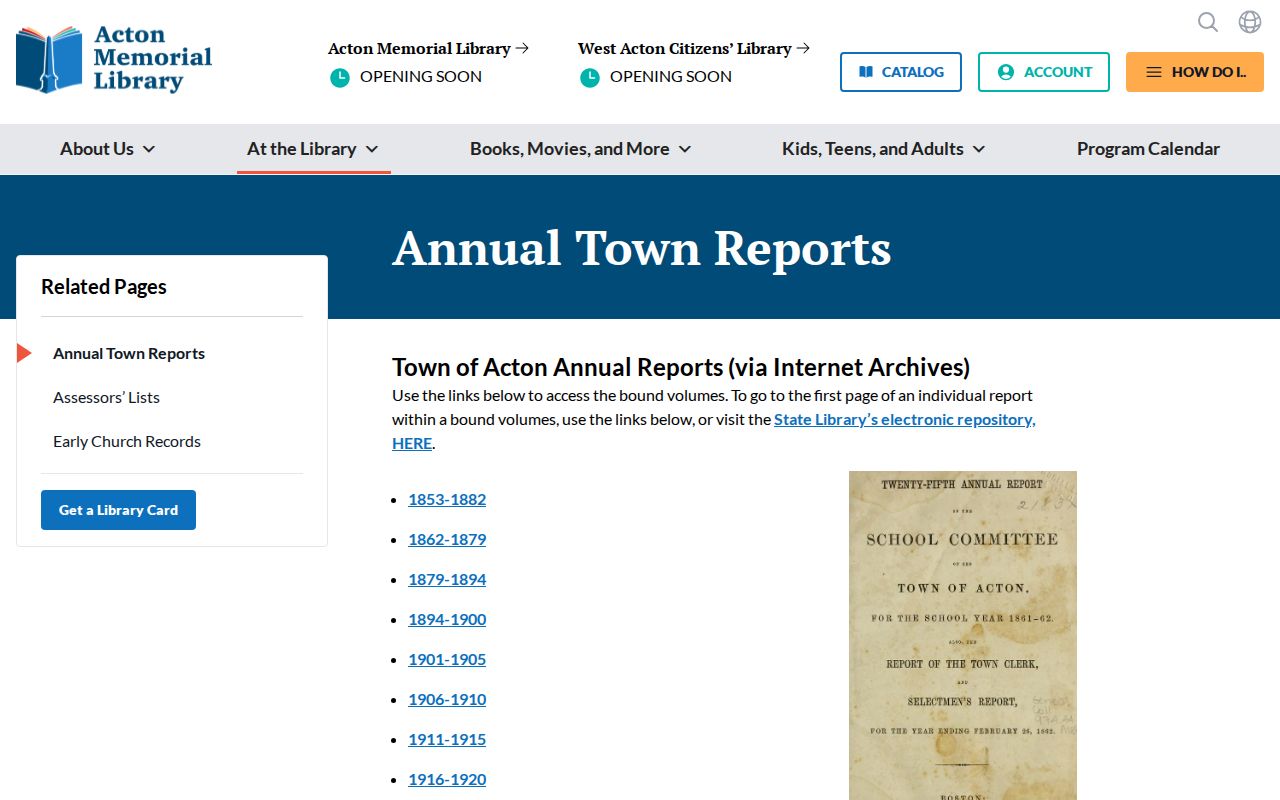
Use the report year as a separate date marker beside the directory edition, especially when an office, school, committee, or town event helps distinguish similar names.
Acton Records Before 1883
For the earliest era, the library’s Early Town Records project begins with Acton’s 1735 incorporation and reaches 1829. It is a 1,226-page transcription with a name index, digital images, library microfilm, and originals retained by the Town Clerk. The collection carries civic, land, meeting, and family references long before the dated directory run. It is a local story of record continuity, but it is still a transcription. Verify a critical name, wording, or relationship against the image or original when the finding matters.
Annual reports, early church material, town-meeting records, newspapers, and cemetery material can bridge later gaps. They answer different questions, so retain each collection’s date and purpose rather than treating them as interchangeable directories.
Tracing Acton Directory Households
Start with one confirmed directory edition and move outward by date. A household trail is strongest when a name, address, and time period agree across independent records. Pair directory dates with the nearest available federal census, remembering that census household schedules follow the 72-year public-release rule. Use the address as a comparison point, not a shortcut around spelling changes or source gaps.
- Locate the earliest available Acton city directory that could contain the known name or address, and capture its edition and page.
- Check the next documented directory year, preserving spelling, street wording, and any notation exactly as printed.
- Compare the two dates with the nearest released census schedule and keep its census date separate from the directory date.
- Use annual reports, newspapers, cemetery records, or early town records to test a move, relationship, or civic reference.
- Mark uncertainty when the name disappears, an edition is missing, or two plausible households cannot be separated.
A disappearance can reflect a move, a name variation, death, a missing edition, or a change in the source’s coverage. It cannot answer itself. A dated obituary, cemetery record, probate record, or later directory may narrow the question without turning an inference into a fact.
Acton Historical Context
The Acton Historical Society adds maps, digitized local histories, cemetery material, and grouped town-meeting records from 1735–1975. Its History Resources collection links work by Fletcher, Phalen, and Josiah Adams, along with the South Acton 1886 map. The Jenks Library is at 300 Main Street and works by appointment, subject to volunteer availability. Use the Society’s contact route to arrange access instead of assuming its materials are open at all times.
Acton Historical Society History Resources provides the historical context for an address or surname after a dated directory listing is found.
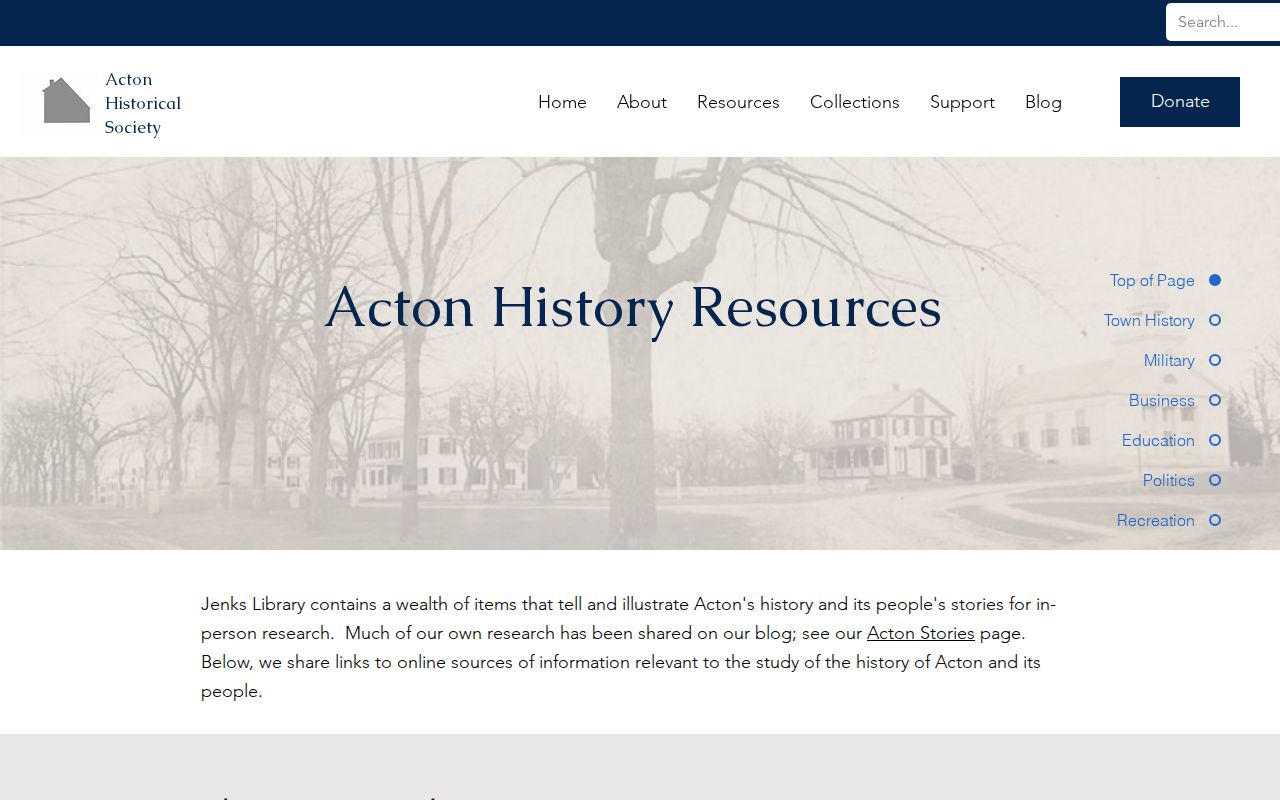
Acton historical maps and Acton town records can explain an old street or community reference, but they do not replace the edition, page, and date of the Acton directory evidence. Keep those sources beside, not inside, the directory citation.