
Acton Address Records by Era
Previous residents of an Acton address are best approached as a dated trail. The modern Acton parcel card provides the key to the most recent recorded transfer. Acton directories and census schedules can then test who was connected to the address in earlier periods, while Acton town books and annual reports add deeper context. Each Acton source has its own date range and purpose. A name in an Acton deed is a party to an instrument; a name in an Acton directory is a historical listing; neither label should be expanded beyond the record.
| Source | Years It Covers | Where Held | What It Shows |
|---|---|---|---|
| Acton Early Town Records | 1735–1829 | Acton Memorial Library; originals with the Acton Town Clerk | Early civic, land, and family references |
| Registry grantor index for Acton | 1896–1973 online range announced in 2025 | MassLandRecords and Registry counter | Grantor/grantee instruments, book/page, document, and plan links |
| Acton directories | 1883–1884, 1902, 1913, 1926, 1936, 1941, 1947, 1950 | State Library inventory and Acton local-history access | Dated Acton address-to-name clues |
| Acton annual town reports | Local runs through 2019; State Library through 2022, with gaps | Acton Memorial Library and Massachusetts State Library | Acton civic and municipal context |
| Acton building permits | Current OpenGov; MUNIS history | Acton Building, Planning, Engineering, and department request | Project address, status, comments, and construction chronology |
| Federal census | Public releases follow the 72-year rule | Census, NARA, and Acton library genealogy access | Household composition and Acton address on the census date |
Start with the Acton source nearest the question’s date. For an earlier Acton address, the Acton directory and census path may be first. For a current Acton parcel with an older title question, begin with the assessor card and Registry link. Previous residents should remain tied to the Acton source year. An Acton gap is a result too, and should be recorded rather than guessed past.
Begin at Acton MapGeo
Open the Acton MapGeo parcel viewer with the exact Acton address. Preserve the street suffix, unit, rear, or lot wording because separate Acton parcels can use nearly identical addresses. Record the Acton parcel ID, assessed owner, mailing address, deed book/page, property-card link, map date, and the viewer’s disclaimer. The Acton MapGeo geometry is approximate, not a survey, and has no legal bearing. Acton Assessor data is uploaded quarterly, so it is a starting point for a record trail rather than a statement about present occupancy.
The Acton Assessor maintains the associated property-information route. An assessed owner can be an entity, trustee, municipality, or person with a mailing address elsewhere. Keep the Acton property address and mailing address in separate fields. That distinction prevents a previous-resident search from converting an ownership or mailing label into a claim about an Acton household. It also keeps prior occupants separate from prior title holders.
Note: When an Acton card shows a deed book and page, use that direct key before relying on a broad surname search.
Acton Deed Chain Records
The Southern Middlesex District Registry of Deeds is the Acton legal-record path for a transfer trail. In the Acton recorded-land search, find the current Acton purchase instrument using the MapGeo deed book/page or property details. The instrument identifies the buyer and seller in their legal roles. For the next step backward, treat the seller as the grantor in the current deed, then search that seller as grantee to find the earlier acquisition. Preserve the Acton instrument type, recording date, book/page, document number, and any referenced plan at every link.
- Capture the target parcel ID, exact address string, assessed owner, mailing address, and deed book/page from MapGeo.
- Open the current purchase instrument in the Middlesex South recorded-land search and record both parties and the legal description.
- Identify the seller as grantor in that instrument, then search that party as grantee for the earlier purchase.
- Repeat the comparison backward, checking every legal description, plan reference, and street wording against the last instrument.
- Stop the claimed chain when the legal description changes or an index gap appears, then use the Registry’s older-book, microfilm, or counter route.
- Grantor
- The party transferring an interest in a recorded instrument.
- Grantee
- The party receiving that interest; a former seller may appear in this role on an earlier purchase.
- Chain of title
- A documented sequence of instruments concerning the same legal property interest.
- Legal description
- The deed’s parcel description, plan, or other formal identifier, which may remain more stable than street wording.
Acton Grantor-Index Years
On October 21, 2025, the Registry announced that grantor indices from 1896 through 1973 became available online free. That expansion is especially useful when tracing an Acton address through mid-century transfers. It does not mean the full historical record is complete online, and a no-result belongs to the exact index range, date range, and name form searched. Use the town filter for Acton when the interface offers it, then test documented spelling or entity variations with care.
The Middlesex South grantor-index announcement documents the 1896–1973 online release.
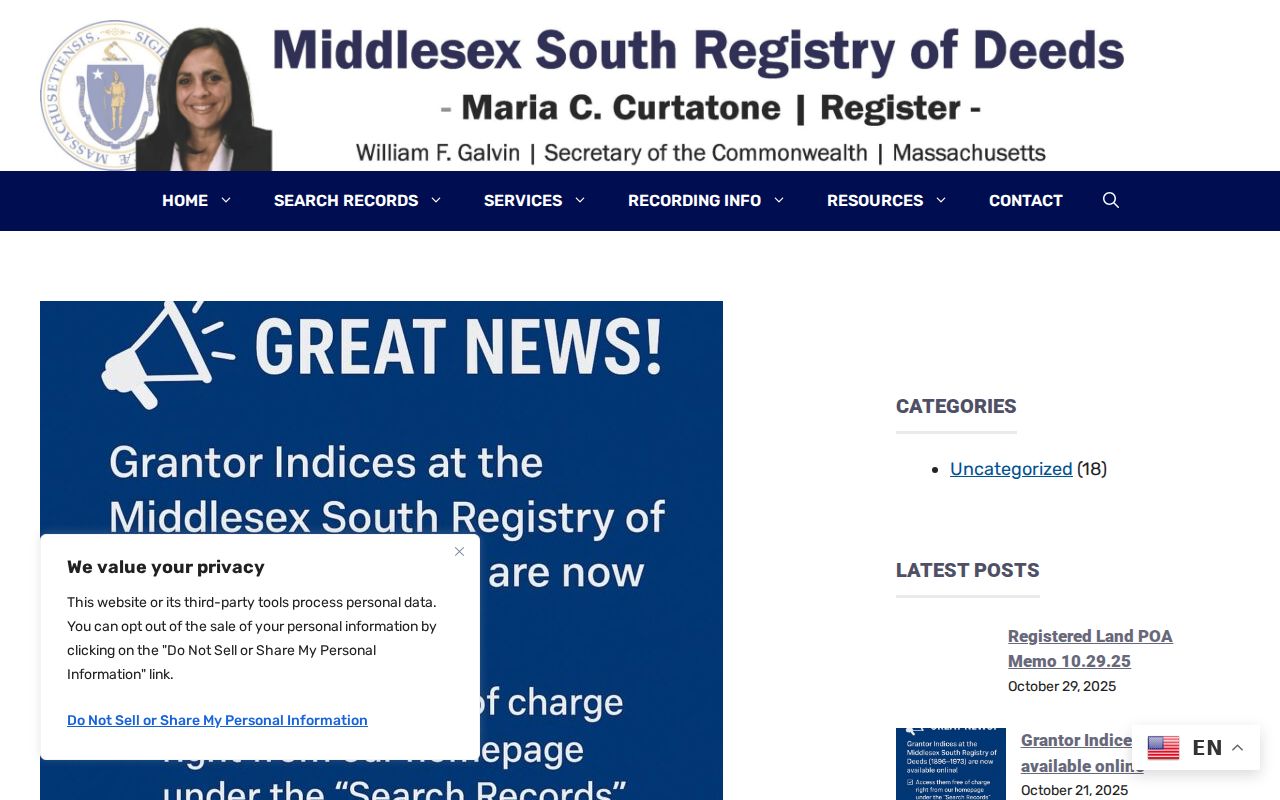
The announcement is a date-specific research advantage for previous residents, not a replacement for comparing each instrument’s legal description and plan references.
Acton Records Beyond an Index
Older records need a defined fallback route. MassLandRecords exposes an Unindexed Property Search for Book 1–1024, while Registry materials and office records may require a separate search. The Southern Middlesex Registry provides online viewing and free downloads for available documents; its counter, mail, email, and certified-copy routes remain relevant when an image, older book, or confirmed record is not available through the index. Do not bridge a gap just because two addresses look similar.
A plan, road layout, easement, or subdivision reference can explain why an address changes across instruments. If the deed descriptions diverge, mark the point of uncertainty and consult the Registry instead of presenting one parcel’s history as another’s. Acton Engineering can also help with street-number assignments, road layouts, plot plans, historic maps, and address-history questions. Its materials complement a deed search, but the Registry remains the recording custodian for the legal instrument.
Acton Directories and Past Households
Deeds explain a legal transfer, not necessarily every household associated with an address. The documented Acton directory dates are 1883–1884, 1902, 1913, 1926, 1936, 1941, 1947, and 1950. Use the edition nearest the deed or address event, then preserve the page, name spelling, and the exact street form. The underlying collections and entry-inspection limits are detailed on the Acton city directory page.
Pair the directory date with the nearest publicly released federal census schedule. The flow is simple: address or deed date to the closest directory edition, then to the closest released census, then back to a dated local source such as a report, obituary, cemetery record, or town book. Each source may confirm a different relationship to the address. Keep every date visible, and do not label a historical household as present-day.
Acton Permit Dates
A permit can add a construction or project date to an address history. Acton routes current Building, Engineering, Conservation, and Planning/Zoning applications through OpenGov, while MUNIS provides a separate route for permit status, plan-review comments, and project history. MUNIS warns that records before November 18, 2015 require contact with the relevant department. Save the system searched, address, parcel ID, permit or application number, status, dates, and whether the record is an application, issued permit, inspection, or closed project.
Acton Town Archives provides a historical context route alongside the municipal systems.
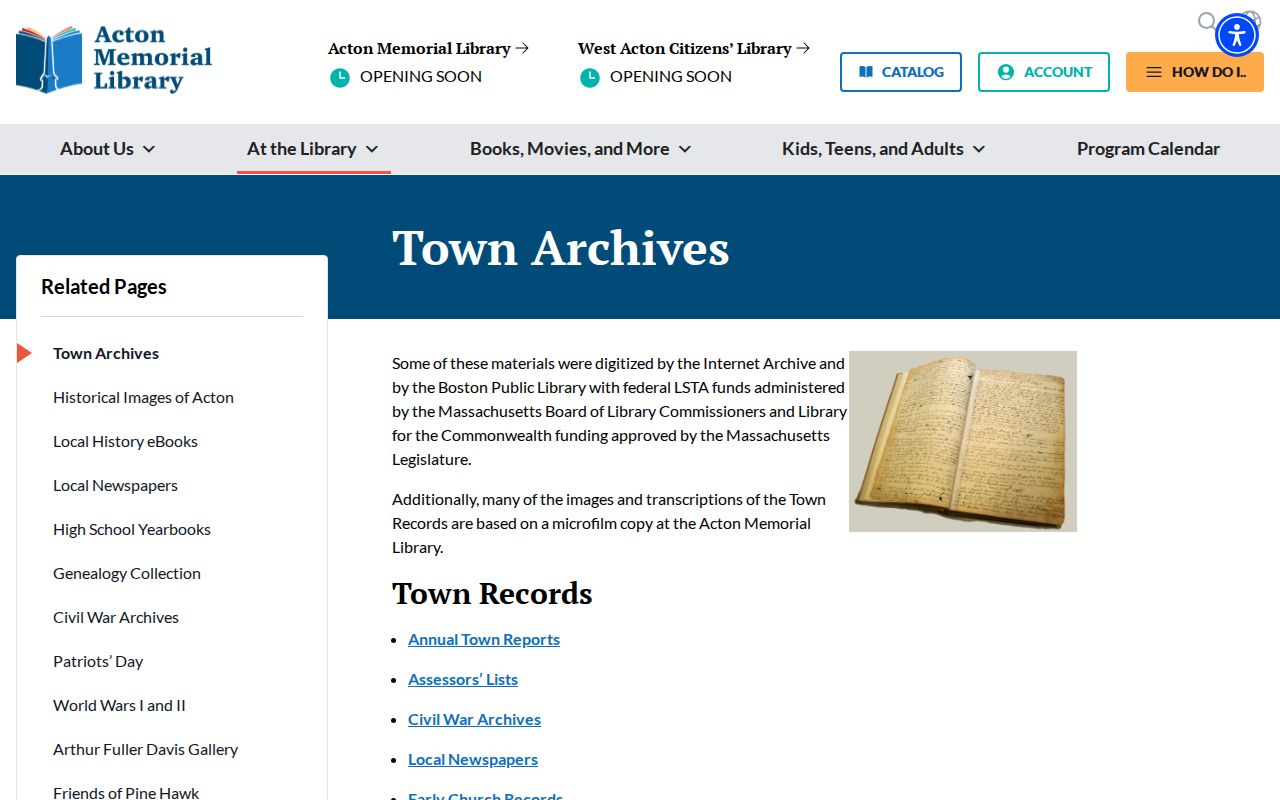
Permit material can date work at a parcel, but an applicant or project contact is not automatically part of the prior household trail.
Acton Records Before 1830
For the earliest period, Acton Memorial Library’s Early Town Records project covers 1735–1829 in a 1,226-page transcription with a name index. Original records remain with the Town Clerk, the library has microfilm, and the project provides digital images. The collection brings early civic, land, meeting, and family references into a house-history search long before the directory years. A vital name, relationship, or land reference should be checked against the image or original because the searchable text is a transcription.
Early names should be kept in their original time frame. A meeting reference, land action, or family mention can help distinguish similar surnames, yet it does not carry a modern address forward. Cite the transcription page, image or original route, and the type of town record used.
The Early Acton Town Records project is the source for this pre-directory research route.
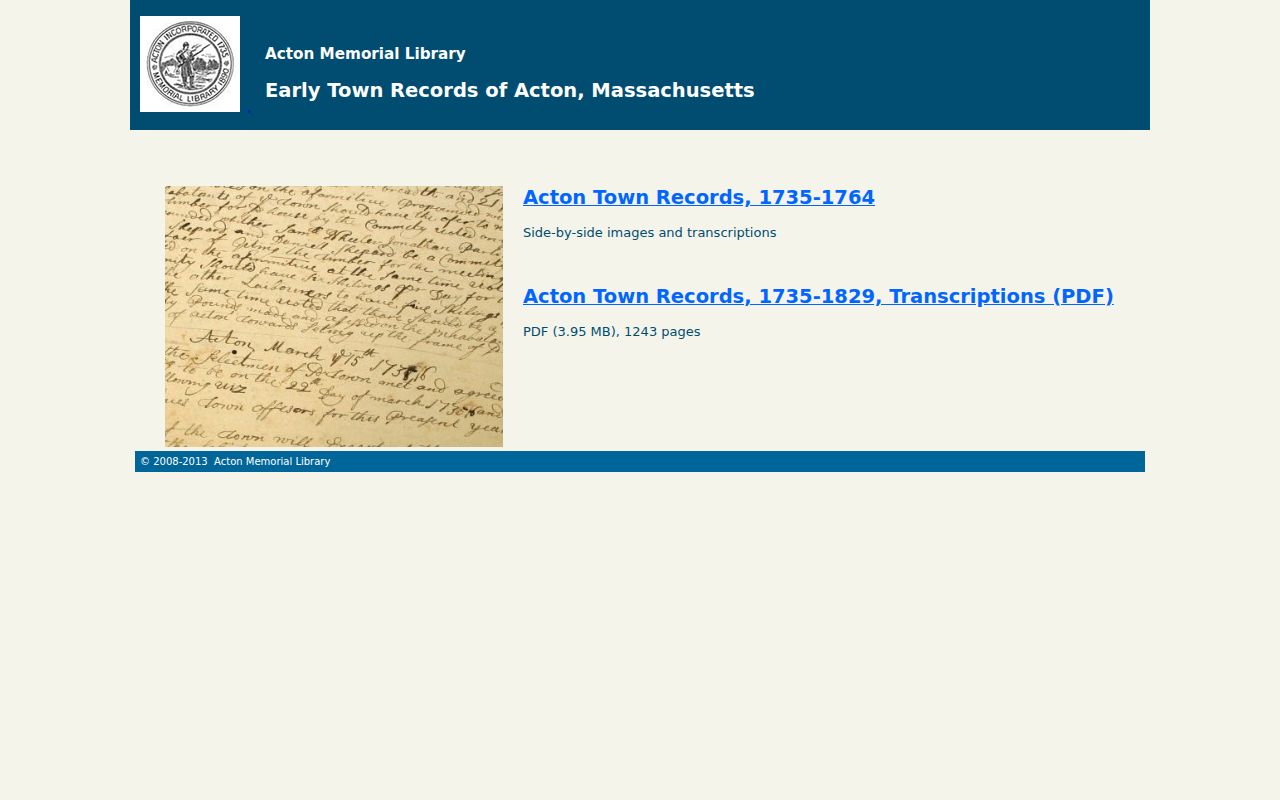
The early collection can supply a dated lead, while the original or image provides the necessary check for a critical historical claim.
Acton Address History Limits
A sound address history distinguishes a legal transfer, a mailing field, a historical directory entry, and a census household. It also preserves unresolved links. Obituaries, cemetery interment and lot records, and probate material can help close a historical trail, but each has a different purpose. A cemetery lot deed is not an interment record, and an obituary should be checked against its date and original publication.
Lawful use. Use Acton house-history sources for family history, civic research, estate questions, and personal curiosity. Do not use historical records to harass, track, or expose any living person.
Massachusetts confidentiality protections can limit address, voter, court, police, or vital material. When a custodian marks information as protected, retain the access instruction and do not use another source to work around the restriction. Past residents deserve the same restraint when the information concerns a living person.